
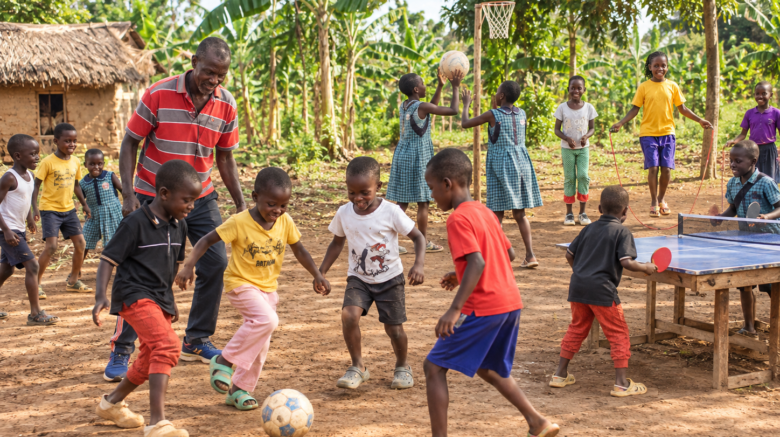
Every talented athlete begins somewhere. For some children, the journey starts on a school field, a village playground, or a simple space where friends gather to play. Yet many promising young athletes never get the chance to develop their abilities because they lack coaching, equipment, exposure, or connections to organized competitions.
Monolith Childcare Initiative hopes to help bridge this gap by developing community-based sporting opportunities that allow children to participate, discover their strengths, and work towards greater possibilities.
Bringing villages together through sport
One of the proposed activities is the organization of inter-village games, bringing children and young people from neighboring communities together to compete, interact, and build friendships.
These games would provide opportunities for football, netball, table tennis, rope skipping, and other suitable recreational activities.
Beyond competition, inter-village events can promote unity, mutual respect, cultural exchange, and peaceful relationships among communities. They can also give parents, local leaders, volunteers, and other residents an opportunity to support children’s development collectively.
With careful planning, fair participation rules, and appropriate safeguarding measures, such events could become an important platform for community engagement and youth development.
Identifying talent and creating pathways
Monolith aims to identify children who demonstrate sporting ability, commitment, discipline, and a willingness to learn.
With support from volunteer coaches and community members, promising participants could be encouraged to improve their skills through regular practice and structured guidance.
Where suitable opportunities become available, the initiative hopes to connect talented children with sports clubs, academies, schools, competitions, and other relevant development pathways.
Such connections could expose young athletes to higher levels of competition, experienced coaches, and opportunities to improve their performance.
Talent identification, however, should not focus only on children who win. Children who demonstrate determination, improvement, teamwork, and enthusiasm also deserve encouragement and opportunities to participate.
Making opportunities more accessible
Children from economically disadvantaged households may face barriers such as transport costs, limited access to sports equipment, and the inability to pay competition fees. These challenges can prevent talented young people from progressing even when they have the ability and motivation to succeed.
Monolith’s wider mission of supporting vulnerable children provides a foundation for seeking partnerships and resources that could help address these barriers as the sports programme develops.
The initiative hopes to work with parents, schools, local leaders, volunteer coaches, sports organizations, and potential sponsors to create pathways that are safe, fair, and accessible.
Any participation in external competitions would depend on available resources, appropriate arrangements, and the consent and welfare of the children involved.
Investing in potential, not just performance
Not every child will become a professional athlete, and success in community sports should never be defined by medals alone. Participation can help children develop discipline, confidence, communication skills, resilience, and relationships that benefit them throughout life.
For those who demonstrate exceptional talent, the right guidance and exposure may open doors to more advanced sporting opportunities. For others, the experience may build healthy habits, friendships, and a stronger sense of belonging.
Through community games and talent development, Monolith Childcare Initiative hopes to help children see that their circumstances do not have to define the limits of their potential.
A village playground can be the beginning of a remarkable journey. With encouragement, opportunity, and community support, today’s young players can become tomorrow’s athletes, leaders, and role models.